
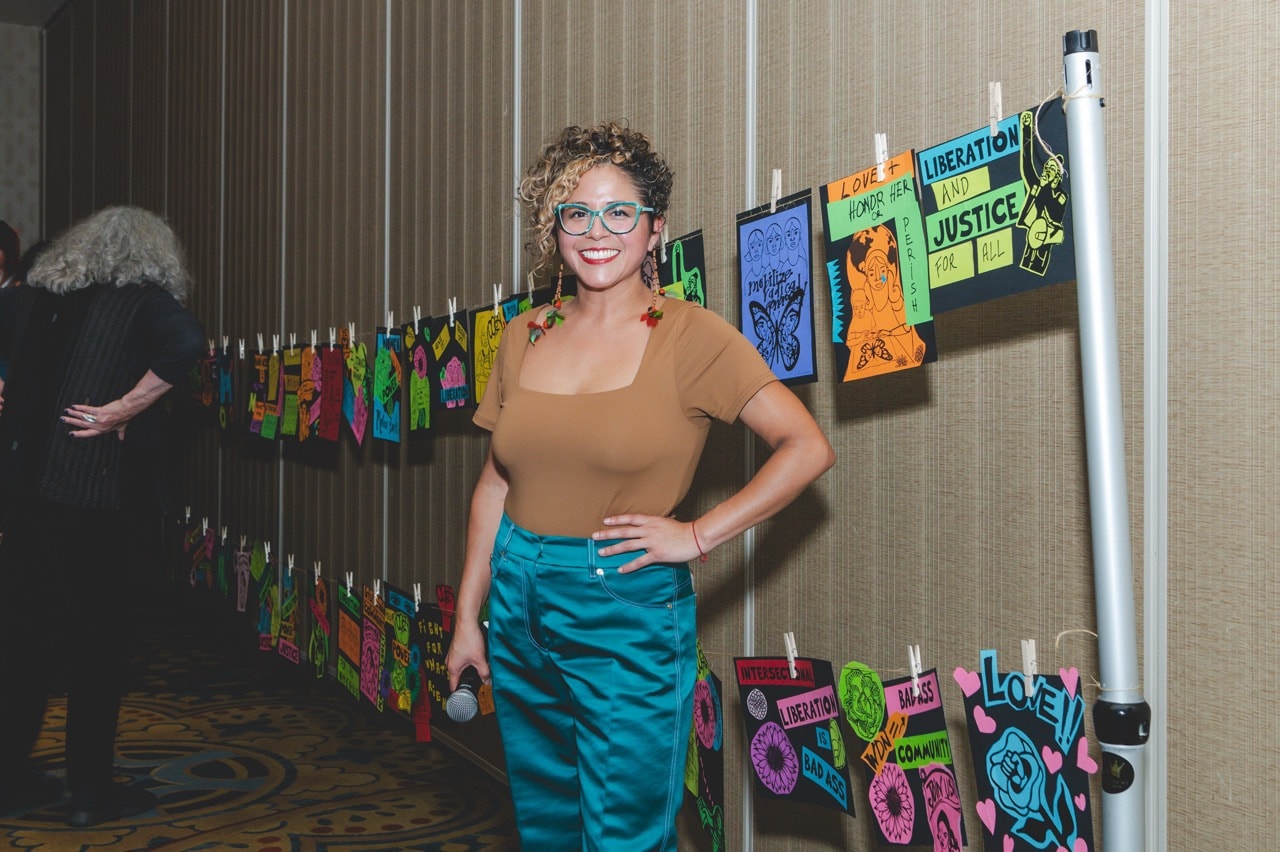
On many of the issues that are most important and most urgent, we need change at a level that cannot even be conceived within our current political discourse. From climate change to immigration to gender equity and LGBTQIA+ rights, politicians and political commentators discuss solutions that represent constrained thinking and marginal change. Our debates can lack imagination and provide marginal space for transformative changes that might actually lead to the world we seek to create. Our laws, policies, and interpersonal interactions need a radical reimagining.
In contrast, artists live in the space of imagination and transformation. They see the world around them not simply as it is, but also as it could be. Artists push up against conventional wisdom or self-limiting notions of what is possible. What if artists had a greater role in the most important conversations, and what if there were stronger links between artists and movements for change? We believe deep, systemic change would be conceivable to many more members of the public and the political elite alike.
Today, though, artists have few opportunities to shape these conversations. Their work is often treated as decorative by movement organizations and elected leaders. Though many cultural decision-makers like directors, producers, and curators are quick to voice their support for systemic change, they still continue to hire an outsized number of white, male, straight, and cis creators. As a result, the cultural landscape, and particularly the pop culture landscape, is still too homogenous and the kinds of narrative-shifting ideas we need still fail to break through.
The Cultural Engagement Lab (CEL), and their c3 arm The Center for Cultural Power, understand that in order to create deeper change, artists—particularly BIPOC and LGBTQIA+ artists—must be leaders in change movements, in cultural sectors, and in our society as a whole. Without their voices, our political institutions will remain sclerotic, our policy debates will be static, and our narratives will reinforce the status quo.
By investing in artist leadership, intersectional storytelling, and field-building, The Center for Cultural Power is creating the role for arts and artists in our politics, and in our society at large that will drive deep and lasting change. CEL leverages this work with the ability to engage in political advocacy. Both organizations are led by artist and activist Favianna Rodriguez and a team of artist disruptors practicing in the field for more than a decade.
Art and culture are powerful engines for voter engagement. Strong movement organizations know how to engage their audiences, but often lack the creative digital content to complement their organizing efforts. When campaigns and organizations partner with artists to tell authentic stories, they can win in the near term and lay the groundwork for powerful narratives to take hold, which makes policy change more probable and sustainable over the long term.