
When we help elect values-aligned leaders to positions of power, we intend for real policy change to follow. But rarely can elected officials do this on their own. Policymaking is difficult work, and the legislative environment is not easy to navigate, particularly in our current environment. To reach a truly successful governing strategy, there’s a level of deep coordination between community groups and elected leaders that’s needed. As donor organizers, this coordination – referred to as co-governance – is part of our political strategy.
Co-governance is the practice of fostering a culture of collaboration between elected officials, movement organizers, and community leaders to approach policy-making comprehensively and in lock-step with one another, while centering the community voices most impacted by the policies at hand. If elections are about determining who’s in the room when decisions are made, co-governance is about who’s driving the conversation forward and toward results.
This is incredibly nuanced work, and while the strategies for co-governance are wide-ranging, the end result is always the same: a policy win reached by intensely collaborative efforts. As part of our WDA strategy, some of our grants go to organizations working directly at the intersection of community organizing and co-governance. This includes:
- In-state grassroots movements like LUCHA, who work first to elect quality representatives, and then work to build long-term relationships with those elected officials. This ensures that their communities work as strategic architects on the policies being pushed forward, while building strong constituencies to hold leaders accountable.
- Organizations supporting state policymakers through coordinated cohorts like State Futures, which is convening, equipping, and enabling collective action among elected officials working at the state and local level. These leaders are often on the frontlines of federal overreach and authoritarianism, and we can support their leadership by connecting and coordinating their efforts on aligned-issues with other elected officials across the state and nation, building strength and allowing for more insight on what works.
- Training and leadership support for elected officials and movement organizers, provided by organizations like re:power and Local Progress. Both of these organizations have incredible strategies in place to train leaders and create new models of governance. Together, they created the Collaborative Governance Academy, which provides local and state elected officials, their staff, and movement leaders with the skills, strategy, and shared language to govern collaboratively and courageously.
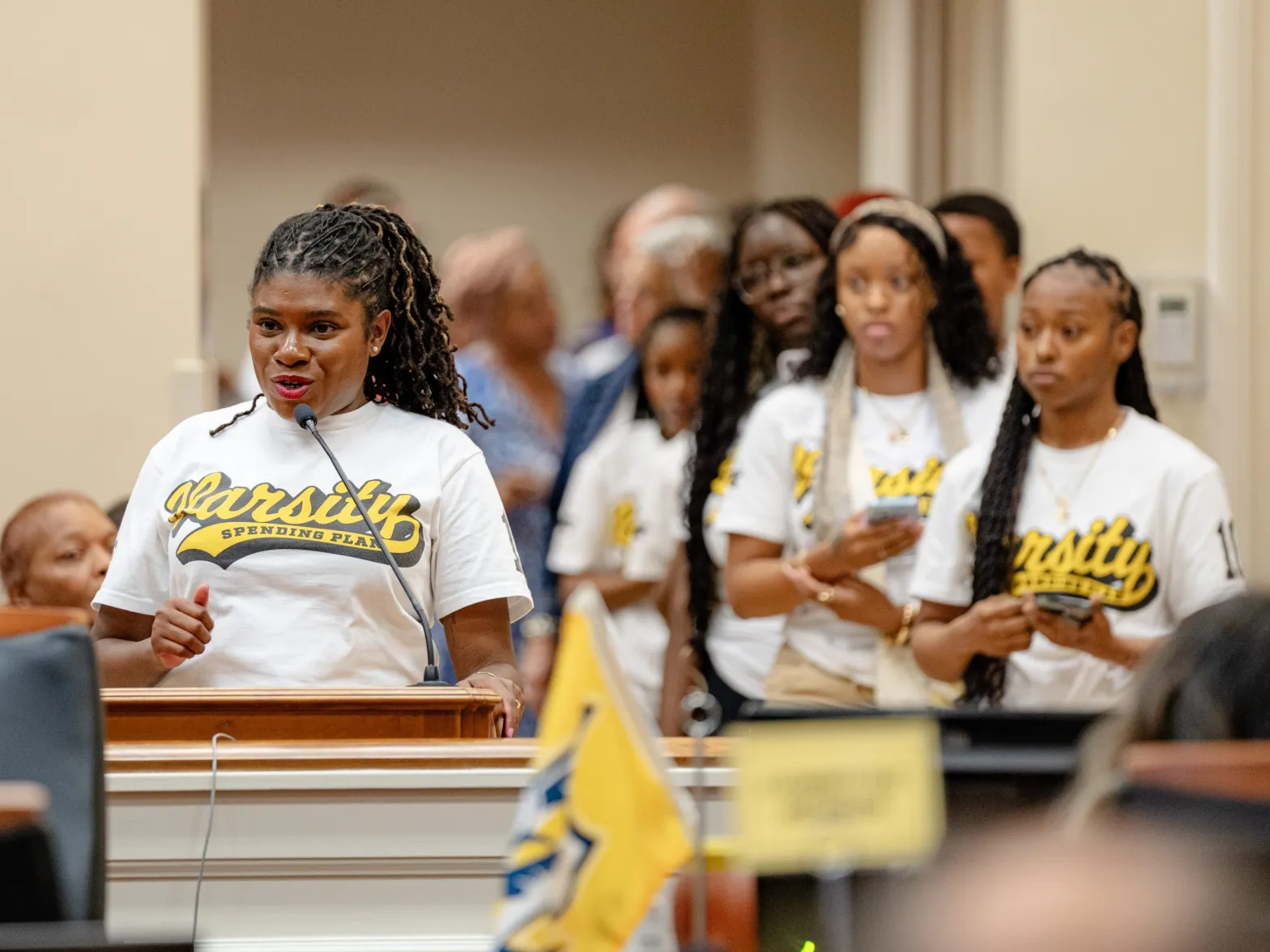
On a recent call hosted by WDA, we discussed the idea of co-governance with leaders from the organizations listed above, and they provided some great examples of co-governance wins. One example included a case study in Tennessee with Nashville City Councilwoman Delishia Porterfield, a trainer at the Collaborative Governance Academy and chair of the Budget Committee for Metro Nashville, who worked directly with a youth organization, Southern Movement Committee, on the issue of gun violence. When the youth organization made visionary demands for immediate gun violence policies, they were met with a city budget that was completely tied up. But instead of ending in frustration, the Councilwoman and the youth organization entered into a months-long conversation to create a collective plan, spending time to understand the inside-outside dynamics of city council politics and solutions around gun violence.
In the short term, they were able to create the first Office of Youth Safety in the country, an immediate but small win; and for the long-term, they built a multi-year $10 million plan—the Varsity Spending Plan— based on power-mapping relationships, organizing needs, and preparing for real change on the issue. This is co-governance in process! And while it’s one small, localized example, grantees like re:power, Local Progress, and others are growing these strategies at-scale.
In the fight against authoritarianism, these co-governance strategies are even more vital. Coordinated fronts, aligned strategies and messaging, and clear power-mapping of relationships are all winning strategies when facing right-wing operatives who arguably do this type of collaborative work extremely well. This is about organizing beyond elections, and it’s the practice of reflective democracy in action.
So what does this mean for us as donor activists? We must continue to fund and support organizations strengthening co-governance strategies, while also continuing to invest in power-building organizations year-round. Without a healthy base, co-governance falls flat. We need a strong ecosystem across the states so that we are consistently organizing relationships, sharing information, growing our leadership, and providing more training and insight into governance frameworks. Additionally, we can power map our own relationships with elected officials in coordination with movement organizers, and we can continue to show up at community protests and legislative events.
Imagine a future where co-governance is the norm for how our government functions. What political possibilities could we bring to fruition if we deepen our coordination efforts across all fronts? We know that progressive policies are popular, and that’s our strength. Being able to govern collaboratively—that’s our growth.